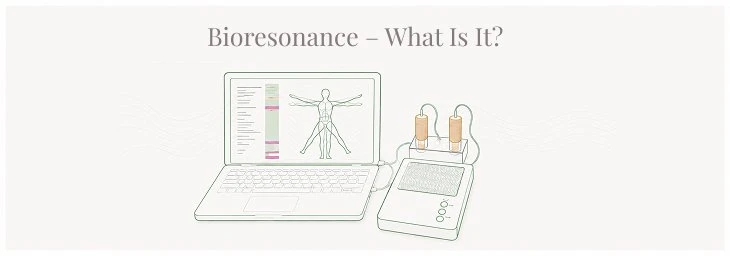
What is bioresonance and frequency therapy?
Bioresonance is a method classified as a complementary therapy that uses specialized electronic devices to work with electromagnetic frequencies. It combines the principles of natural medicine with solutions based on modern, non-invasive technology. Bioresonance and frequency therapy can be used both for preventive purposes, supporting overall well-being, and as support for therapies already being conducted.
How can the operation of bioresonance be understood? We already know that all living organisms emit characteristic electromagnetic signals. Every cell, tissue, as well as individual microorganisms such as bacteria, fungi, or parasites, possess their own frequency patterns that can be identified using appropriate devices. On this basis, systems have been developed that are intended to analyze specific frequencies and use them during therapeutic procedures.
During the procedure, the device records and processes signals originating from the body. According to the theory of bioresonance, this makes it possible to detect frequencies that differ from those considered normal for humans. Subsequently, appropriately selected electromagnetic waves are used, which are intended to affect the detected burdens and support the body in restoring balance.
Most importantly, a significant feature of this method is its non-invasive nature. The procedures do not require the administration of medications or the performance of procedures that disrupt tissue continuity – no needles, no stress, in a safe environment. For this reason, the therapy is perceived as comfortable and may be used by people of different ages. As a result, it constitutes an alternative approach for people seeking natural ways of supporting the body and limiting the influence of factors considered burdensome to health.
In many countries of Western Europe, the United States, and Australia, bioresonance has been known and used for several decades, where it functions as one of the methods of complementary therapy. In 2009, the Higher Regional Court in Munich issued a positive ruling in favor of bioresonance, recognizing its therapeutic and diagnostic effectiveness.
*Based on the judgment of the Higher Regional Court in Munich of May 14, 2009 (case number: 6 U 2187/06).
What is bioresonance used for?
A bioresonance test is performed in order to, in the following sequence:
- find the cause of disorders in the body,
- assess the overall state of the body's functioning,
- detect biological and environmental burdens,
- determine the direction of therapy (indications for medical examinations and supportive therapies).
A general report on the body's functioning may indicate:
- disorders in the functioning of cells, organs, and systems,
- inflammatory conditions, allergies,
- burdens from pathogens, toxins, and heavy metals,
- energy blockages.
How to prepare for a bioresonance test?
Ensure proper hydration
Before the bioresonance examination, drink at least 2 litres of water on the day before the examination and on the day of the examination. Proper hydration improves the body's electrical conductivity and increases the accuracy of measurements. Do not consume alcoholic beverages for up to 24 hours before the examination, and do not consume caffeinated beverages immediately before the examination.
Wear comfortable clothing
Whenever possible, wear comfortable clothing, comfortable sweatpants, loose-fitting clothes. At the examination site, the therapist usually provides blankets and pillows so that you can lie down in a calm atmosphere and undergo a long-lasting examination.
Reserve sufficient time
A bioresonance examination may last from 1 to even 3 hours, depending on the number of areas being analyzed. Reserve an appropriate amount of time so that you do not feel pressure or haste during the test.
What does a bioresonance test look like?
A bioresonance test is painless and non-invasive and consists of lying in a comfortable position while holding two electrodes in your hands. During the test, you may feel gentle vibrations passing through your hands, often described as a "tickling" sensation.
Alternatively, instead of handheld electrodes, adhesive skin electrodes may be used, particularly useful during analysis in children.
During the session, a detailed interview is also conducted regarding the client's lifestyle, habits, diet, and well-being.
The result of a bioresonance test is a comprehensive report concerning the general condition of the body, based on knowledge from Traditional Chinese Medicine and naturopathy, containing:
- indications for further medical examinations,
- recommendations regarding lifestyle and dietary changes,
- indications of ways to relieve the emotional sphere,
- a proposal for frequency sessions supporting overall well-being.
The analysis is not a medical examination nor a medical diagnosis — it is a tool supporting the understanding of the body and the selection of therapies.
Contraindications to bioresonance therapy
A contraindication to the use of a bioresonance test and frequency therapies is the presence of a pacemaker and pregnancy. Before meeting with the therapist, any acute or chronic illnesses should be mentioned, especially those concerning the circulatory system, cancer diseases, or autoimmune diseases.
Possible side effects of frequency therapy
In some cases, the occurrence of the so-called Jarisch-Herxheimer reaction (commonly called "herx" or "die-off") is possible. It is a temporary worsening of well-being that occurs when a large number of pathogens (e.g., bacteria, fungi, or parasites) die off under the influence of therapy, releasing toxins into the bloodstream and causing symptoms such as:
- headache and dizziness,
- shortness of breath,
- muscle pain,
- joint pain,
- skin rashes,
- weakness,
- drowsiness.
ATTENTION!
bioresonance is not a laboratory test,
bioresonance is not a medical examination within the meaning of Polish law,
the information is for informational purposes,
complementary therapy does not replace medical advice.