In a holistic approach, we look beyond the symptoms alone. The body very often signals that it needs support — immunological, anti-inflammatory, emotional and regenerative. That is why natural methods of working with the sinuses focus not only on clearing the nose, but also on restoring balance throughout the whole organism.
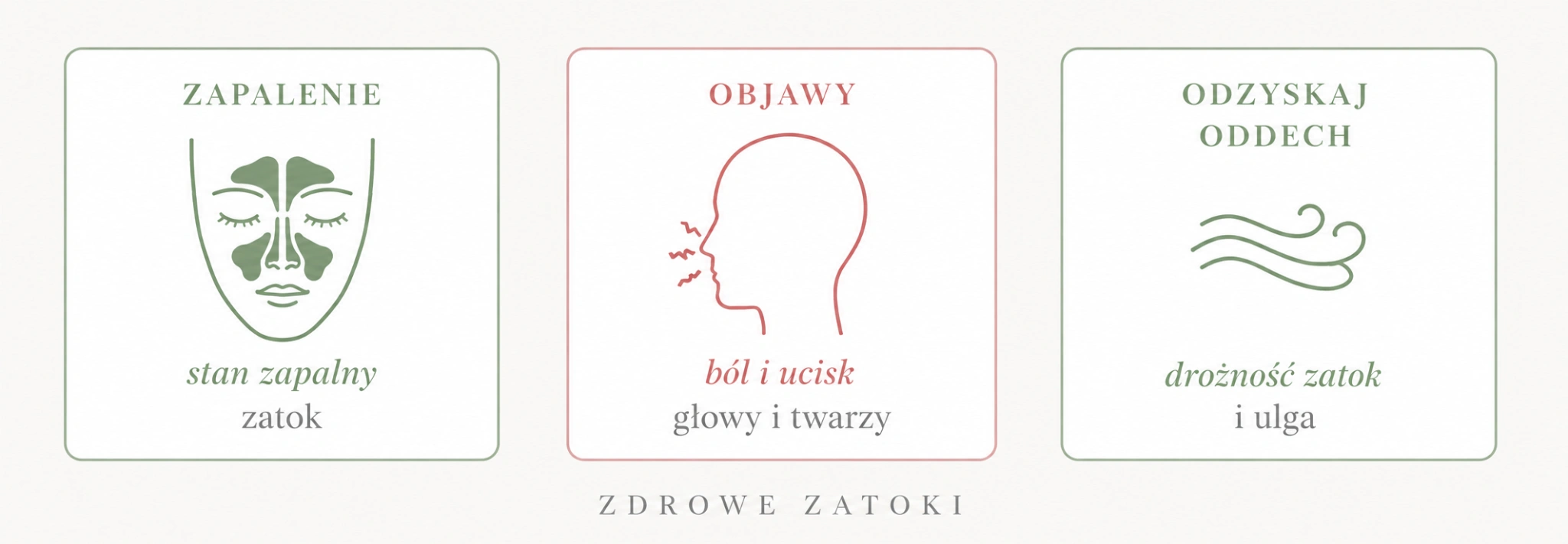
Sinusitis is an inflammation of the mucous membrane of the paranasal sinuses. It may be acute or chronic and manifests with headaches, a feeling of pressure around the nose and forehead, nasal discharge, post-nasal drip, fatigue and difficulty breathing. A holistic approach looks not only at the symptoms but also at immunity, lifestyle, emotional state and chronic overload of the body.
Natural support for the body during sinusitis covers several key areas: clearing the sinuses, reducing inflammation, improving immunity and supporting regeneration.
The most common causes of sinusitis
The most frequent triggers include:
- viral and bacterial infections,
- allergies,
- chronic stress,
- weakened immunity,
- dry or polluted air,
- food intolerances,
- chronic systemic inflammation.
Chronic sinusitis often indicates that the body has been struggling with immunological or environmental overload for some time.
Natural methods of supporting the body during sinusitis
1. Sinus rinsing and nasal irrigation
One of the most frequently recommended natural methods is rinsing the sinuses with a physiological or sea-salt solution using a neti pot or a dedicated irrigator. This helps remove secretions, allergens and microorganisms, and reduces swelling of the mucous membrane.
It is important to use sterile, boiled or appropriately filtered water.
2. Humidifying and inhalations
Dry air very often worsens sinus problems. Helpful measures include:
- steam inhalations,
- diffusers with essential oils,
- air humidifiers,
- hot showers and baths.
Eucalyptus, oregano or peppermint oil are particularly popular, as they help unblock the airways.
3. An anti-inflammatory diet
Natural medicine places considerable importance on diet. It is worth limiting:
- sugar,
- highly processed foods,
- excess dairy products (in some people these may increase mucus production),
- alcohol.
Recommended instead are:
- vegetables and fruits rich in antioxidants,
- broth and warm fluids,
- fermented products that support the microbiome,
- adequate hydration.
4. Natural substances that support immunity
Naturopathy often draws on ingredients that support the body, such as:
- vitamin C,
- zinc,
- NAC (N-acetylcysteine),
- echinacea,
- astragalus,
- herbs with anti-inflammatory properties.
5. Warm and cold compresses
Alternating warm and cool compresses may improve circulation and reduce the feeling of pressure in the sinuses.
Total Biology – the emotional background of chronic sinusitis
According to Total Biology, chronic sinusitis may also have an emotional basis. It is often interpreted as a conflict related to a so-called "stinking situation" — something uncomfortable, difficult or unacceptable that a person has been unable to deal with.
In this framework, the sinuses are symbolically linked to "smell" — the ability to sense what is going on around us. Chronic problems may therefore point to long-standing emotional discomfort, suppressed frustration or living in a situation that is psychologically burdensome.
A psychosomatic approach does not replace medical diagnosis, but it can be a valuable element of a deeper look at health and the roots of chronic problems.
Frequency therapy – Dr Carolyn McMakin's approach
An increasing number of people with chronic sinusitis are also turning to frequency therapy, known as Frequency Specific Microcurrent (FSM), developed by Carolyn McMakin.
This method uses very low microcurrents and specific frequencies designed to support the body in combating chronic sinus inflammation.
Support your body's ability to self-regulate and regenerate.
Book an appointment and start with a conversation about your needs.
Book a sessionWhen to see a doctor?
Natural methods can support the body, but you should consult a doctor when:
- symptoms persist for more than 10–14 days,
- a high fever develops,
- there is severe pain in the face or head,
- vision problems appear,
- infections recur regularly.
A holistic perspective on sinus health
Chronic sinusitis is very often not simply a local problem. The body may be signalling immune overload, chronic stress, contact with allergens or unresolved emotional tension. A holistic approach combines physical support, emotional work and lifestyle adjustments to restore the body's natural balance.
Support your body's ability to self-regulate and regenerate.
Book an appointment and start with a conversation about your needs.
Book a sessionFrequently asked questions
Acute sinusitis typically lasts up to four weeks and is most often the result of a viral or bacterial infection. Chronic sinusitis persists for more than twelve weeks and may have many causes — from allergies and chronic stress to food intolerances and immune overload. A holistic approach focuses particularly on these deeper underlying causes.
Yes, diet can be significant. In some people excess dairy increases mucus production, sugar and processed foods promote inflammation, and nutritional deficiencies weaken immunity. A diet rich in antioxidants, fermented foods and adequate hydration can support the body in regeneration and reducing inflammation.
Frequency Specific Microcurrent (FSM) is a method developed by Dr Carolyn McMakin that uses very low microcurrents and specific frequencies to support body tissues. For chronic sinusitis, the aim is to support anti-inflammatory and regenerative processes at the cellular level. The method is non-invasive and painless.
You should see a doctor when symptoms persist for more than 10–14 days, when a high fever develops, when there is severe facial or head pain, when vision problems appear, or when infections recur regularly. Natural methods can support the body but do not replace medical diagnosis and treatment.
Important: This article is educational in nature and does not replace medical advice or diagnosis.